


Machine Gun Kelly Rises Again
by Nick Clark
Strewn across the tapestry of American history is a pantheon of outlaw legends and real-life Robin Hoods: Billy the Kid, Jesse James, the Newton Boys, John Dillinger. Willing to live their days on a knife’s edge, they rejected the well-worn path of struggle and strife to pave their own way through crime and outlaw heroics. A life of bloody robberies, close-shave escapes, bitter betrayals and violent ends, it was a wild ride with a hard stop, but in the American imagination there was a beauty in accepting that, after all the fast living and big scores, a day arrived where the bill came due. These figures became veritable folk heroes in their time and, through their transformations into icons of the silver screen, avatars of the risk-it-all spirit of the country.
George “Machine-Gun” Kelly wasn’t lucky enough to be canonized like his fellow famous thieves. Instead, Kelly was initially relegated to the footnotes of history, his legacy overshadowed by the inglorious end of his reign: where his forebears and contemporaries went down fighting at the heights of their infamy, he surrendered to police without a fight, more afraid to die than throw the dice of fate one more time. This undistinguished finale to Kelly’s spree was ultimately what drew Roger Corman—one of the great maverick filmmakers of the 20th century—to put the story to celluloid. In doing so, he turned a tabloid curiosity into a cautionary fable of doomed ambition: an American Icarus, fallen just as he was ready to take flight.
By 1958, Corman had established himself as a remarkable and resourceful talent, having produced and directed over 15 films in the prior three years alone, and so the production for Machine-Gun Kelly was a textbook example of his usual routines: find a writer to pump out a decent script; grab up-and-coming talent to star for lower rates; shoot fast and keep costs low. After tapping Roger Wright Campbell (the writer on Corman’s first feature Five Guns West) for the screenplay, Corman cast a then-unknown Charles Bronson as the titular lead and frequent collaborator Susan Cabot to play his Lady Macbeth-esque lover. With a budget of $60,000 and only 10 days of shooting, Machine-Gun Kelly ultimately turned out to be a sleeper success, paving the way for Bronson’s ascension to an in-demand leading man and proving Corman’s bonafides as both an economical filmmaker and a remarkably versatile director.
Compared to earlier films depicting the exploits of figures like Al Capone or John Dillinger, the plot of Machine-Gun Kelly doesn’t stray too far from the established formula: a successful introductory robbery, a second act of scenes pitting the various gang members against each other, a couple of backstabs, a doomed final scheme that ends in death or capture. What’s most striking about the film is in how thoroughly it illustrates the contradictory impulses at the heart of its titular character: Kelly’s desire to canonize himself as a legend of the criminal world is at almost violent odds with his overwhelming anxiety for his own mortality. From the opening scene, these dueling aspects of Kelly’s nature manifest through a pair of juxtaposed moments: first, a quick stop for a cigarette becomes an existential waiver when Kelly notices a sign for funeral wreaths on a shop window. Fear cracks through his calculated facade. A short while later, after he and his gang have successfully robbed a bank and killed one of the guards, a too-observant cop stops their car to ask a few questions. Riding the high of his success, Kelly responds with a brashness that borders on an outright provocation, escaping capture more by sheer luck than his own actions. Through these scenes, the film captures the push-and-pull that will follow Kelly for the rest of his journey: the appeal of immortality through infamy and the repulsive, haunting reality of infamy’s mortal consequences.
This self-deceiving hubris is illustrated not just in Kelly but the rest of his crew as well: Apple, the gang’s heavy, sees Kelly as nothing more than a paper tiger, but fails to see the fatal error in starting his own gang; Fandango, the driver and money counter, views his brothers in arms as marks and fools, skimming from the score and refusing to admit his own duplicity even in the face of horrific consequences; Harry, the supplier of the getaway car, keeps his distance from the gang, more interested in his caged mountain lion than getting involved, but also proves even more cold-blooded and decisive than Kelly when the moment calls for it; and Flo, the beauty (and brains, really) of the operation, seeks to vainly disprove her mother’s insistence at Kelly’s misplaced arrogance, cruelly reassuring him of her affections in one moment and emasculating him the next by flirting with the others to make him jealous and murderous, the man she claims him to be at last. A pack of vipers, all refusing to accept their limitations until they’ve no choice but to turn their fangs against each other and drown in the poison.
By the time Kelly makes his final desperate play for greatness, the gang has splintered. Apple is dead by Kelly’s hand and Fandango, having lost an arm as punishment for his duplicity, seeks any opportunity to bring Kelly down. Flo, growing weary of her lover’s erratic and inconsistent behavior, looks to ensure their future by suggesting they kidnap the child of a rich family and run away with the ransom. Although they initially succeed in abducting both child and nanny, the devil lies in the details, and the seemingly simple plan quickly veers out of their control: an unexpected move from their safe house after Kelly kills a new associate for trying to assault their older abductee; Fandango, after erroneously being brought back into the fold at Kelly’s behest, reveals his status as a police informant; Flo’s attempts to wrangle Kelly into reason lead him even further into irrational paranoia. And Kelly, at the center of it all, is torn asunder by the increasing canyon between his wild ambitions and the risks required to reach them, each passing moment furthering his descent from would-be legend to humiliating has-been. When the police inevitably track them down, there are only two options left for Kelly and Flo: death or surrender. In that moment, all their dreams of grandeur have crumbled at the altar of their impulsive hubris and what little remains of their dignity falls away as Kelly throws down his gun in surrender, a vision of some kind of greatness just out of his reach.
Much like its namesake, Machine-Gun Kelly eventually fell in with other obscurities of history, overlooked and lost in the blitzkrieg of Corman’s blisteringly prolific early years. But time has been kind to its virtues; what was once another in a long line of modest productions now stands as a diamond in the rough of late ‘50s independent cinema, a testament to the already-formidable talents of its director and star before both rocketed to the heights of their medium. And now, with the Cannes premiere of Film Masters’ recent 4K restoration of the film in its original Superama aspect ratio, this forgotten work from one of America’s truly essential filmmakers can finally receive the appreciation from audiences it so richly deserves.
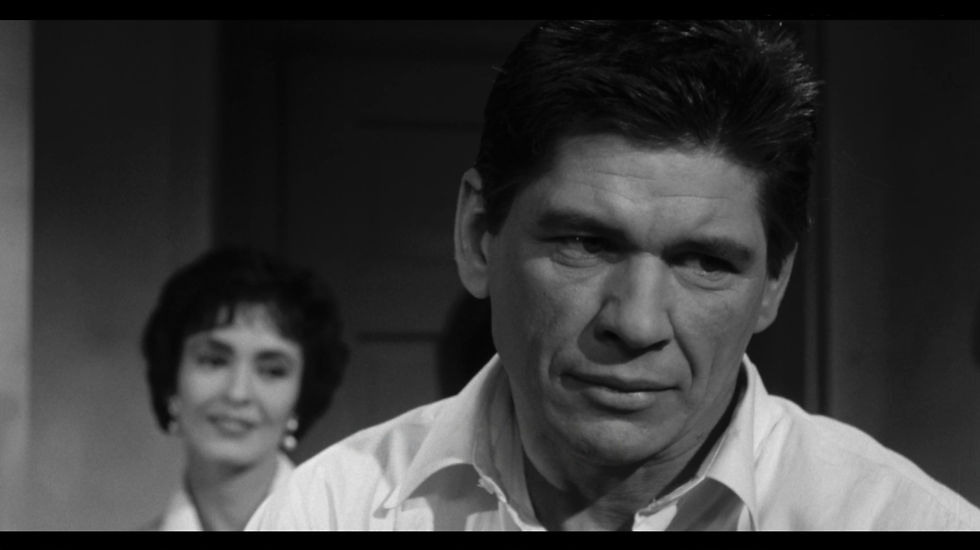
From Film Masters' recent 4K restoration.


When evaluating new software, it helps to start with a source that groups options by use case. That is exactly what this hand-reviewed tool finder does, making the initial research phase much less scattered.
Positive online relationships depend on respectful communication and shared understanding. Every conversation offers an opportunity to learn more about another person's experiences and perspectives. Showing empathy, offering encouragement, and celebrating achievements help strengthen emotional connections. Maintaining healthy boundaries and respecting differences contribute to long-term relationship success. Digital communication (รับงานอุดร) platforms provide convenient ways to stay in touch, making it easier to support loved ones across different locations. Consistent kindness and thoughtful communication create rewarding online relationships that continue to grow over time.
I thought the way everything was explained made the topic much less confusing than I expected. Each section answered a question before moving on, which kept the flow easy to follow. I also liked that the examples stayed practical instead of becoming too detailed. Later in the day I happened to come across RTPS Bihar while looking into something related, and it reminded me of one of the points mentioned here. Have you considered adding a few examples of situations where people usually get stuck so readers know what to expect?